 LymyVoyage
50 Cosmetic-Surgery Deaths in Korea: 28% Were Foreigners
LymyVoyage finding
Partially supported by the available data.
The death count and its rising trend are well-documented by a primary forensic study, but no country in this comparison publishes a procedure-volume denominator, so no actual mortality rate or cross-country risk ranking can be computed from this data.
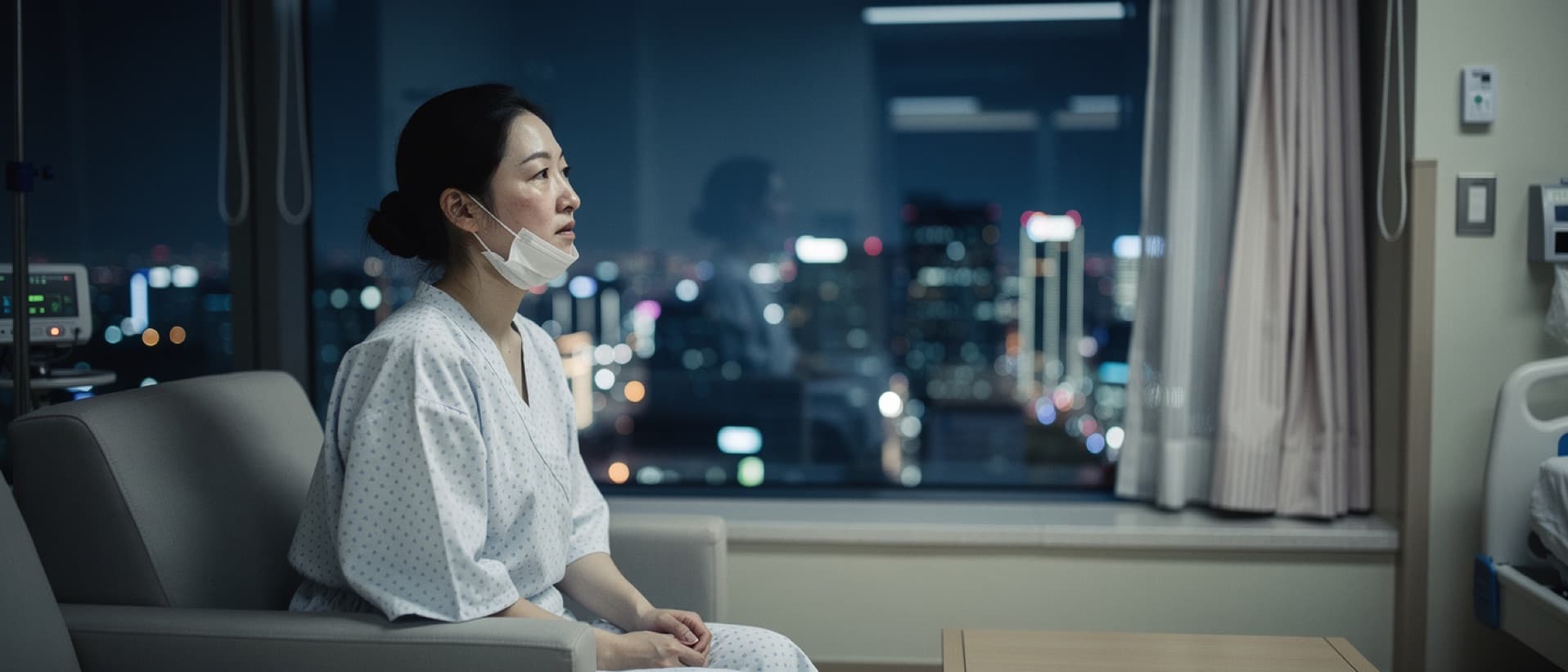
South Korea markets itself to medical tourists on a simple promise: world-class technology, meticulous safety systems, and results good enough that six in ten foreign patients say they'd come back.1 Then, in November 2025, a team from the country's own National Forensic Service published something that sits uneasily next to that promise — a systematic count, drawn from nine years of autopsy files, of everyone who died having cosmetic surgery in Korea.2 Fifty people. More than a quarter of them were visiting from abroad.
What the Forensic Data Actually Shows
The study, "Beauty and Fatality: A Forensic Perspective on Periprocedural Deaths after Aesthetic Procedures," ran in the Korean Journal of Legal Medicine on November 30, 2025.2 A team led by researchers at Korea's National Forensic Service reviewed 50 autopsy cases from 2016 through 2024 in which an aesthetic procedure was determined to be the direct cause of death — an average of 5.6 deaths a year, but with a clear upward trend: 4 in 2016, climbing to 7 by 2020, 8 in 2021, and 13 in 2024.23
Of the 50 people who died, 41 were women and 9 were men; the median age was 29 for women and 50 for men.2 Nearly two-thirds of the deaths, 64 percent, happened in the greater Seoul area, where the country's cosmetic-surgery industry is concentrated.3 Face and neck procedures accounted for just over half of the fatal cases (52 percent), followed by body liposuction (22 percent) and vaginal rejuvenation procedures (12 percent).2
Anesthesia complications were the single largest cause of death, responsible for 23 of the 50 cases (46 percent) — a figure the Korea Herald's independent reporting on the study also cites, putting the same number in slightly different framing ("nearly half the deaths ... were caused by anesthesia complications").23 Procedural complications caused another 32 percent, and natural disease unmasked or worsened by the procedure accounted for 12 percent.2
And 14 of the 50, 28 percent, were foreign nationals.23
The study's authors added an important caveat, one that matters more than any single number in the paper: Korea has no official system for tracking cosmetic-surgery complications or deaths, because these procedures fall outside national health insurance. That means the 50 cases counted here are almost certainly a floor, not a ceiling — the true number is likely higher, since the count only includes deaths where an autopsy was performed and directly attributed the death to the procedure.2
The Foreign-Patient Numbers Behind the 28%
To understand why a 28-percent foreign-national share is notable, it helps to know how big Korea's foreign-patient market actually is. According to Korea's Health Industry Development Institute (KHIDI) and the Ministry of Health and Welfare, 1.17 million individual foreign patients received medical treatment in Korea in 2024 — a 93.2 percent jump from 2023, and the first time the figure passed 1 million since the foreign-patient program began in 2009.4 The Korea Times, reporting separately in February 2026, cites the same 1.17 million figure and describes it as "nearly doubling" year over year, with Japan (about 440,000), China (about 260,000), and the US (about 100,000) as the top three source countries.1
Seoul's own city government breaks the 2024 numbers down further: 999,642 of the nationwide total, or 85 percent, were treated at medical centers in the capital, spending a combined ₩1.2 trillion (roughly $923 million).5 By treatment type, dermatology dominated at 64.2 percent of visits; plastic surgery was second at 12.7 percent, or 131,541 visits.5 For 2023, Al Jazeera separately reported 605,768 non-resident foreign patients nationwide, with plastic surgery accounting for 16.8 percent of procedures — more than 114,000 surgeries — making it the second most-sought specialty after dermatology.6 Those two independent figures, one from Seoul's city government and one from Al Jazeera's own reporting citing national data, both land in the same 600,000-plus range for 2023, which is a reasonable cross-check on the overall scale even though the precise procedure-mix percentages differ slightly by source and year.56
Set against that backdrop, foreign nationals making up 28 percent of cosmetic-surgery deaths — while representing a much smaller slice of Korea's roughly 12-17 percent plastic-surgery patient share56 — is the detail that should give a prospective medical traveler pause. It doesn't prove foreign patients face higher individual risk (no rate can be computed either way, for the same denominator problem noted above), but it does mean foreign patients are not simply sharing risk in proportion to their share of the overall patient pool.
Foreign nationals made up 28 percent of Korea's cosmetic-surgery deaths between 2016 and 2024 — roughly double their estimated share of the country's plastic-surgery patient volume.256
Is This a Korea Problem, or a Medical-Tourism Problem?
Korea is not the only cosmetic-surgery destination where a similar pattern has surfaced. The US CDC, publishing in its Morbidity and Mortality Weekly Report in January 2024, documented 93 cosmetic-surgery-related deaths of US citizens in the Dominican Republic between 2009 and 2022.7 The annual pace nearly tripled over that period too: an average of 4.1 deaths a year from 2009-2018, rising to an average of 13.0 a year in 2019-2020 (peaking at 17 in 2020).7 Among the cases with detailed records, liposuction and gluteal fat transfer were involved in nearly every death, and fat embolism was the leading identified cause (55 percent of autopsy-confirmed cases).7
Mexican health authorities have raised a parallel concern about Tijuana specifically: Mexico's medical-tourism sector reports 30-35 deaths a year nationwide, a mortality rate of 4-5 per 100,000 procedures, and Tijuana alone accounts for roughly 20 percent of the country's total surgical fatalities — concentrated, as in Korea, in cosmetic and bariatric cases.8
These three data points — Korea, the Dominican Republic, Mexico — come from three different reporting systems with three different methodologies (a forensic autopsy review, a CDC epidemiological study, and Mexican health-sector case reporting), so they should not be blended into one global rate. None of them, including Korea's, comes with a reliable procedure-volume denominator that would let anyone rank the destinations by actual risk. What they share is a pattern: rising death counts in exactly the destinations that have seen the fastest growth in cosmetic-surgery tourism, with no country yet able to produce a real incidence rate for medical tourists specifically.
What Korea's Safety Marketing Leaves Out
The Korea Times quotes a hospital official crediting "systematic infection control and efforts to minimize complications" for the country's reputation.1 That's a real institutional practice at accredited hospitals — but "accredited" is doing more work in that sentence than it first appears to.
Korea's primary safety credential for foreign-facing hospitals, the Korean Accreditation Program for Hospitals Serving Foreign Patients (KAHF), evaluates institutions against roughly 149 items across foreign-patient services and patient-safety systems, and requires re-evaluation every two years.9 But KAHF accreditation is voluntary, not a legal requirement to treat foreign patients — a clinic can operate and market to medical tourists without ever seeking it.9
Two other gaps compound that voluntary-accreditation problem:
- Illegal brokers. Reports of unlicensed patient brokers steering foreign patients to clinics — filed with KHIDI's own reporting center — rose from 11 in 2021 to 16 in 2022 to 59 the following year.6 Al Jazeera's reporters, posing as prospective patients, said they were approached within minutes online by facilitators who admitted they held no official certification.6 China's embassy in Seoul issued a formal warning to its citizens in January 2024 after a Chinese national died following liposuction in Seoul's Gangnam district, urging travelers to verify brokers' and clinics' legitimacy before booking and to keep full medical and surgical records.10
- "Ghost surgery." Korean courts have historically treated a substitute, unlicensed practitioner performing part or all of an operation as an unlicensed-practice offense rather than battery — meaning fines and short license suspensions rather than revocation.11 The Korean Society of Plastic Surgeons has estimated roughly 100,000 patients were affected between 2008 and 2014 alone, with about five deaths linked to ghost surgery specifically between 2014 and 2022.11 Korea introduced a rule in September 2023 letting patients under general anesthesia request their surgery be filmed, with clinics that refuse facing fines up to 5 million won (~$3,600); in September 2025, the Ministry proposed going further, mandating documentation of everyone who enters the operating room and doubling the license-suspension period for doctors who order unlicensed staff to operate, from three months to six.11
Two named cases illustrate what these gaps look like in practice. In 2020, Hong Kong fashion heiress Bonnie Evita Law died during liposuction at a Seoul clinic after being introduced through an unlicensed broker; the surgeon who operated on her was an orthopedic specialist, not a plastic surgeon, and was later charged with professional negligence resulting in death.6 And "Alex," an American patient who traveled to Korea for rhinoplasty, told Al Jazeera she was "rushed into surgery within an hour" of her consultation and later needed emergency removal surgery back in the US for complications, saying: "I felt abandoned, like I was on a conveyor belt."6
The Market Kept Growing Anyway
None of this has slowed Korea's medical-tourism growth. Regulators have responded with paperwork, not a pause: in March 2026, the Ministry of Health and Welfare moved to formalize its authority to investigate broker "commission fees" and the charges levied on foreign patients, requiring clinics to report these figures in annual performance records — an acknowledgment, officials said, that the existing law's enforcement framework "lacked clarity."4
Market-research estimates of the underlying industry vary by roughly 60 percent depending on what's counted: IMARC Group puts South Korea's 2025 cosmetic-surgery market at $1.8 billion, while other industry estimates run as high as $2.9 billion when non-surgical procedures like injectables are included.12 Either way, growth is the dominant story the industry tells about itself, and the mortality data has not, so far, changed that narrative.
What the Study Cannot Tell You
It's worth being explicit about the boundaries of what this data supports, because it's easy to overstate a well-sourced number in either direction.
The NFS study cannot tell you the odds of dying from cosmetic surgery in Korea, as a foreign patient or otherwise — there is no official procedure-volume count to divide 50 deaths by. It cannot tell you whether Korea is safer or riskier than Turkey, Thailand, Mexico, or the Dominican Republic, because none of those countries publishes data on a comparable basis, and the Korean researchers' own dataset is limited to autopsy-confirmed cases, which by their own account likely undercounts the true toll.2 It also cannot tell you anything about the rate of complications that don't end in death — the far larger and better-known risk category in cosmetic surgery generally.
What it can tell you, with reasonable confidence: the annual death count from cosmetic procedures in Korea has risen consistently for eight straight years; foreign nationals are a disproportionate share of that count relative to their share of the patient pool; and several of the specific failure modes behind individual cases — unlicensed brokers, ghost surgery, voluntary-only accreditation — are structural gaps that predate this study and, as of the most recent 2025 legislative proposals, are still being addressed with incremental rules rather than closed outright.
How to Use This If You're Actually Considering It
If you're weighing cosmetic surgery in Korea, the practical takeaways from this data are narrower than the headline numbers suggest, but they're actionable:
- Verify accreditation directly, don't take a clinic's word for it. KAHF accreditation is voluntary and expires every two years — check current status through Korea's official Medical Korea portal rather than a clinic's own marketing claims.9
- If you're using a broker or facilitator, confirm their registration. Illegal-broker reports rose more than fivefold in two years; ask directly whether the intermediary is registered, and be skeptical of anyone contacted through unsolicited social-media outreach.6
- Ask specifically about anesthesia protocol. It's the single largest identified cause of death in the NFS study (46 percent of cases) — ask who administers anesthesia, their qualifications, and what emergency equipment and staffing are on-site.2
- Use your right to request recording under general anesthesia. This has been a legal patient right in Korea since September 2023 specifically to guard against ghost surgery; a clinic that resists is a red flag.11
- Get everything in writing before you fly, and keep your records after. The Chinese embassy's post-2024 guidance — verify legitimacy, sign a clear contract, retain full documentation, carry your surgical certificate when you leave — is generic advice, but it's generic advice written in direct response to a real death, not a boilerplate disclaimer.10
"Advanced medical technology. Systematic infection control. World-class safety." That's how Korea's medical-tourism industry describes itself to the more than a million foreign patients who now fly in every year for everything from dermatology to rhinoplasty. But does the country's own mortality data back that up?
Footnotes
-
https://www.koreatimes.co.kr/southkorea/others/20260225/from-thyroid-surgery-to-k-beauty-why-foreign-patients-turn-to-korea — The Korea Times, "From thyroid surgery to K-beauty, why foreign patients turn to Korea" (published Feb 25, 2026). Accessed Sep 10, 2026. ↩ ↩2 ↩3
-
https://www.kjlm.or.kr/journal/view.php?doi=10.7580%2Fkjlm.2025.49.4.133 — Korean Journal of Legal Medicine, Park et al., "Beauty and Fatality: A Forensic Perspective on Periprocedural Deaths after Aesthetic Procedures, and Insights for Death Investigation and Public Health Safety" (published Nov 30, 2025), Vol. 49 No. 4, pp. 133-147. Accessed Sep 10, 2026. ↩ ↩2 ↩3 ↩4 ↩5 ↩6 ↩7 ↩8 ↩9 ↩10 ↩11 ↩12
-
https://www.koreaherald.com/article/10674556 — The Korea Herald, "When beauty turns fatal: Korea logs 50 plastic surgery deaths since 2016," citing the National Forensic Service study above. Accessed Sep 10, 2026. ↩ ↩2 ↩3 ↩4
-
https://www.ajupress.com/view/20260301094201959 — AJU Press, "S. Korea enters era of 1 million foreign patients, moves to regulate medical fees," citing Korea Health Industry Development Institute and Ministry of Health and Welfare data (published Mar 1, 2026). Accessed Sep 10, 2026. ↩ ↩2
-
https://english.seoul.go.kr/seoul-draws-1m-international-medical-tourists-in-2024-with-%E2%82%A91-2t-in-medical-spending/ — Seoul Metropolitan Government, "Seoul Draws 1M International Medical Tourists in 2024 with ₩1.2T in Medical Spending." Accessed Sep 10, 2026. ↩ ↩2 ↩3 ↩4 ↩5
-
https://aljazeera.com/news/2024/12/23/as-south-korea-draws-visitors-chasing-beauty-dodgy-practices-pose-risks — Al Jazeera, "As South Korea draws visitors chasing beauty, dodgy practices pose risks" (published Dec 23, 2024), citing KHIDI reporting-center data. Accessed Sep 10, 2026. ↩ ↩2 ↩3 ↩4 ↩5 ↩6 ↩7 ↩8 ↩9
-
https://pmc.ncbi.nlm.nih.gov/articles/PMC10824547/ — Centers for Disease Control and Prevention, Morbidity and Mortality Weekly Report, Hudson et al., "Deaths of U.S. Citizens Undergoing Cosmetic Surgery — Dominican Republic, 2009–2022" (published Jan 25, 2024). Accessed Sep 10, 2026. ↩ ↩2 ↩3
-
https://mexicobusiness.news/health/news/tijuanas-medical-tourism-under-scrutiny-following-patient-deaths — Mexico Business News, "Tijuana's Medical Tourism Under Scrutiny Following Patient Deaths." Accessed Sep 10, 2026. ↩
-
https://clinicsoncall.com/en/blog/is-south-korea-safe-for-plastic-surgery/ — Clinics on Call, "Is Plastic Surgery in South Korea Safe? Risks, Regulations, and What Patients Must Know," describing the Korean Accreditation Program for Hospitals Serving Foreign Patients (KAHF). Accessed Sep 10, 2026. ↩ ↩2 ↩3
-
https://www.scmp.com/news/asia/east-asia/article/3249158/chinese-embassy-warns-plastic-surgery-risks-south-korea-after-liposuction-death — South China Morning Post, "Chinese embassy warns of plastic surgery risks in South Korea after liposuction death" (published Jan 2024). Accessed Sep 10, 2026. ↩ ↩2
-
https://www.canvassresearch.com/blog/ghost-surgery-korea — Canvass Research, "Ghost Surgery in Korea: What It Is and How to Protect Yourself," citing Korean Society of Plastic Surgeons estimates and 2023/2025 Ministry of Health and Welfare rule changes. Accessed Sep 10, 2026. ↩ ↩2 ↩3 ↩4
-
https://www.imarcgroup.com/south-korea-cosmetic-surgery-market — IMARC Group, "South Korea Cosmetic Surgery Market Size & Forecast 2034." Accessed Sep 10, 2026. ↩
Evidence at a glanceMethodology
| Statement | Source | Tier | Date | Status |
|---|---|---|---|---|
| South Korea's National Forensic Service counted 50 deaths tied to cosmetic procedures between 2016 and 2024 | Peer-reviewed academic journal (Korean Journal of Legal Medicine)1 (Archived copy) | 1 | 2025-11-30 | Supported |
| 14 of the 50 deceased (28%) were foreign nationals | Peer-reviewed academic journal (Korean Journal of Legal Medicine)1 (Archived copy) | 1 | 2025-11-30 | Supported |
| Annual cosmetic-surgery deaths in Korea rose from 4 in 2016 to 13 in 2024 | Peer-reviewed academic journal (Korean Journal of Legal Medicine)1 (Archived copy) | 1 | 2025-11-30 | Supported |
| Anesthesia-related complications caused 23 of the 50 deaths (46%) | Peer-reviewed academic journal (Korean Journal of Legal Medicine)1 (Archived copy) | 1 | 2025-11-30 | Supported |
| 1.17 million individual foreign patients received medical treatment in Korea in 2024, a 93.2% increase from 2023 | News report citing Korea Health Industry Development Institute (KHIDI) / Ministry of Health and Welfare data4 (Archived copy) | 4 | 2026-03-01 | Supported |
| US CDC documented 93 cosmetic-surgery-related deaths of US citizens in the Dominican Republic 2009-2022, with the annual rate rising from 4.1/year to 13.0/year | US CDC Morbidity and Mortality Weekly Report10 (Archived copy) | 1 | 2024-01-25 | Approximate |
| Tijuana accounts for roughly 20% of Mexico's total medical-tourism surgical fatalities; Mexico's national rate is 4-5 deaths per 100,000 procedures | Trade/business news report on Mexican health-sector data11 | 4 | -- | Approximate |
| Korea's KAHF foreign-patient hospital accreditation, covering ~149 safety/service items, is voluntary rather than mandatory | Medical-tourism advisory site8 (Archived copy) | 4 | -- | Approximate |
| Reports of illegal, uncertified patient brokers in Korea rose from 11 (2021) to 16 (2022) to 59 (2023) | News investigation citing KHIDI reporting-center data6 (Archived copy) | 4 | 2024-12-23 | Approximate |
Enjoyed this? Get more like it
Occasional emails, no spam -- just new articles as they're published.
More from Reviews & Patient Experiences



Comments
Loading comments…