 LymyVoyage
Is Tijuana Safe for Surgery? The 20% Death Claim, Checked
LymyVoyage finding
Partially supported by the available data.
The specific "20% of Mexico's deaths" and "4-5 per 100,000" figures trace to a single trade-press report citing unnamed health authorities with no linkable primary dataset, so they should be read as directional, not verified; the broader pattern of real, multi-patient safety failures at specific Tijuana facilities is independently confirmed by WHO, CDC, and state-government sources.
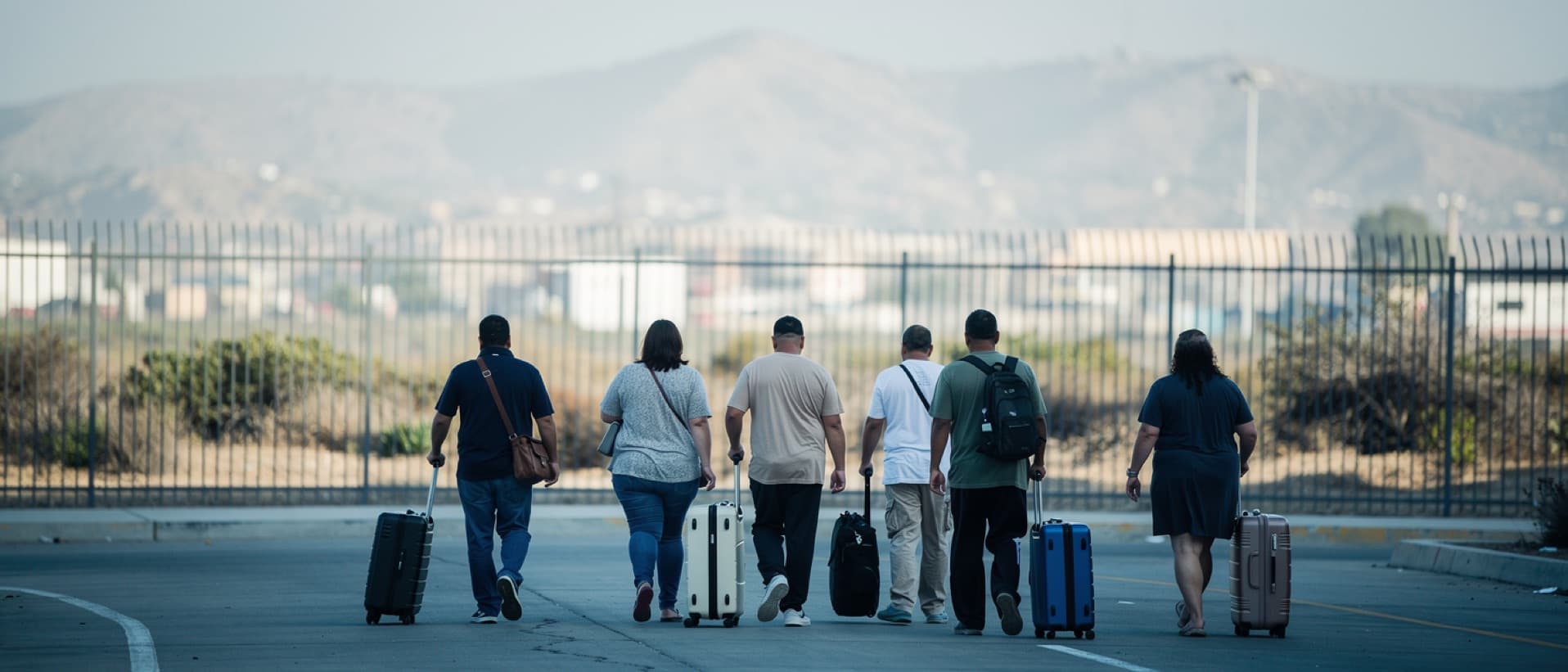
Tijuana's medical-tourism industry runs on two numbers that don't obviously fit together: millions of cross-border patients a year drawn by savings of 40-70% on procedures like gastric sleeve surgery, and a recurring drumbeat of outbreak investigations, state health-department warnings, and individual deaths tied to specific Tijuana clinics going back at least to 2019. One trade-press report puts a single figure on the risk side of that ledger — Tijuana accounts for roughly 20% of Mexico's medical-tourism surgical deaths. That number turns out to be much harder to verify than the outbreaks it's meant to summarize.
What the Only "20%" Source Actually Says
The specific claim under examination here — that Tijuana accounts for about 20% of Mexico's medical-tourism surgical deaths — comes from a single trade-press article, published January 27, 2025, which attributes the figure to unnamed Mexican "health authorities" without linking or naming the underlying government dataset.1 The same article reports that Mexico's medical-tourism sector logs 30-35 deaths a year nationwide, works out to a mortality rate of 4-5 per 100,000 procedures against roughly 1.5 million cosmetic procedures performed in Mexico annually, and states this "significantly exceeds international averages" without citing a specific comparison figure.1
This publication could not locate a Mexican federal government document — from COFEPRIS (the health-products regulator) or the Secretaría de Salud — that states the 20% figure, the 30-35 nationwide death count, or the 4-5-per-100,000 rate directly. That doesn't mean the underlying pattern is wrong; Mexican health authorities may well have shared these figures with the reporting outlet without a public dataset attached, which is common practice in health-sector trade journalism. But it means this specific quantification should be read as a single-sourced, secondary account of a government claim, not as independently verified data — a materially different evidentiary standing than the outbreak-specific figures below, every one of which traces to a primary public-health body's own report.
Three Things That Are Independently Documented
Unlike the 20% figure, the following incidents are each confirmed by a primary public-health source, not a single trade article.
Grand View Hospital, 2019. The World Health Organization's Disease Outbreak News reported that, as of February 11, 2019, 20 cases (16 confirmed, 4 suspected) of carbapenem-resistant Pseudomonas aeruginosa — a drug-resistant "superbug" — had been identified across nine US states, 15 of them in patients who'd had surgery, primarily for weight loss, at Grand View Hospital in Tijuana.2 A local investigation found the hospital's reusable surgical equipment "was not being appropriately processed," creating a bloodborne-infection risk; the Mexican government closed the hospital, and the CDC and Canada's public health agency both issued formal travel notices.2 Utah's Department of Health and Human Services separately confirmed in July 2019 that a Utah resident died after testing positive for the same resistant organism (VIM-CRPA) following weight-loss surgery in Tijuana — almost certainly a case connected to the same outbreak, given the matching pathogen, procedure type, and city.3
Named individual deaths, 2019-2021. Beyond the Grand View cluster, US local and national news outlets have separately documented at least two other Tijuana-specific cases with named patients: Markita "Kiki" McIntyre, a 34-year-old from Biloxi, Mississippi, who died during sleeve gastrectomy surgery in Tijuana in 20214; and Dulce Herrera of Arizona, who died at a Scottsdale hospital two weeks after gastric bypass surgery in Tijuana, with her family citing a severe post-surgical intestinal infection.5 Neither case is reported as connected to Grand View or to each other — they are separate, independently reported incidents at different facilities.
Matamoros, 2023 — a different border city, worth distinguishing. A widely covered fungal-meningitis outbreak is sometimes folded into "Tijuana" coverage, but it did not happen in Tijuana: the CDC's investigation centered on River Side Surgical Center and Clinica K-3 in Matamoros, Tamaulipas — a different Mexican border city roughly 1,500 miles east. As of the CDC's August 31, 2023 case count, 151 US residents were under investigation, with 9 suspected, 14 probable, and 10 confirmed cases, and 12 deaths (3 probable, 9 confirmed) tied to Fusarium solani fungal contamination linked to epidural anesthesia.6 It's included here not as a Tijuana statistic but because it shows the same pattern — a real, multi-patient, government-investigated outbreak tied to specific unaccredited border clinics — recurring at a different Mexican medical-tourism hub just four years after Grand View, which is relevant context for how isolated or systemic this risk category is across the border region generally.
A 2021 peer-reviewed study identified 76 clinic locations advertising medical services in Tijuana; only one had licensing information that verifiably matched its business name and address.7
The Regulatory Gap Behind All of This
A study published in Stem Cell Research & Therapy in March 2021 offers the closest thing to a systematic look at how well-regulated Tijuana's medical-tourism clinics actually are — though its scope is specifically regenerative-medicine and stem-cell clinics, not bariatric or general cosmetic surgery, so it should be read as evidence about the broader regulatory environment rather than a direct statistic about the clinics involved in the deaths above. Researchers searched English- and Spanish-language web results for direct-to-consumer marketing and identified 110 unique websites corresponding to 76 confirmed clinic locations in Tijuana, concentrated in the Zona Río commercial district.7 Of those, 13 clinics claimed to be licensed; cross-checking against Mexican licensing authorities found only 10 clinics licensed in total among everything identified, and only one where the business name and address matched accurately.7
That finding doesn't establish what fraction of all Tijuana medical-tourism clinics are unlicensed — the study covered one specific treatment category — but it's a rare piece of independently verifiable evidence about how difficult it is, even for researchers deliberately trying, to confirm a Tijuana clinic's licensing status from the outside. It's consistent with what the documented outbreaks above have in common: Grand View Hospital was a licensed hospital that failed on equipment sterilization, not an unlicensed operator, which is itself a reminder that licensing status and safety outcome are not the same question.
Why the Volume Numbers Are Also Inconsistent
Any mortality rate needs a reliable denominator, and Tijuana's patient-volume figures are as inconsistent as its death-count figures. Industry and regional-news sources describe Tijuana drawing anywhere from roughly 2 million to 2.5 million patients a year, generating on the order of $1.3 billion annually — figures this publication could not trace to a specific government or trade-body dataset with a stated methodology or year.1 A separate figure, citing the Patients Beyond Borders research group and the Global Wellness Institute, puts all of Mexico's medical-tourism volume at 1.4 to 3 million international patients as of 2020 — a range wide enough, and dated enough, that it cannot be used to sanity-check a more specific, more recent Tijuana-only claim.
None of this means Tijuana's patient volume is small — every documented incident above confirms a large, real patient flow, and the cost gap driving it is genuine and well-established independent of any single statistic: cross-border patients are widely reported to save 40-70% on procedures like gastric sleeve surgery, dental implants, and cosmetic work relative to US list prices, savings large enough on their own to explain sustained demand regardless of the exact visitor count.1 But saving on the procedure and having a reliable safety statistic about it are two different things, and it does mean nobody publishing on this topic, this publication included, currently has a reliable enough numerator-and-denominator pair to state an actual mortality rate specific to Tijuana. The 4-5-per-100,000 figure attributed to Mexican health authorities may be directionally right; it simply isn't independently verifiable with the sourcing available.
This matters most for the exact procedures behind the documented cases above. Bariatric surgery — gastric sleeve and gastric bypass specifically — was the common thread in the Grand View outbreak, the McIntyre case, and the Herrera case alike; all three involved weight-loss surgery, not the cosmetic procedures (rhinoplasty, liposuction, "mommy makeovers") that dominate a lot of Tijuana marketing content. That's a narrower, more specific pattern than "Tijuana medical tourism is risky" — it's closer to "the documented multi-patient failures found for this piece cluster specifically around bariatric surgery," which is worth knowing if bariatric surgery is what you're actually considering, and worth not over-generalizing from if it isn't.
What This Data Cannot Tell You
This is worth stating plainly rather than letting a specific-sounding percentage imply more precision than exists. The available record cannot tell you the actual probability that a given bariatric or cosmetic procedure in Tijuana ends in death or serious complication, because no independently verified numerator (Tijuana-specific deaths, consistently counted over a defined period) and denominator (Tijuana-specific procedure volume, over the same period) both exist in a form this publication could confirm. It also cannot tell you whether Tijuana is more or less dangerous than other Mexican medical-tourism hubs — Matamoros' 2023 outbreak shows the risk isn't unique to Tijuana, but no source compares rates across cities on a common basis.
What the record can tell you with confidence: multiple, separate, primary-source-confirmed multi-patient safety failures have occurred at specific named Tijuana facilities since at least 2019; the regulatory paper trail for at least one category of clinic there is thin enough that a determined academic study could verify only one facility's licensing claim out of dozens; and the most commonly repeated summary statistic about the scale of the overall problem is not, as far as this research could establish, traceable to a public primary source.
How to Use This If You're Actually Considering It
- Don't rely on a clinic's own licensing claim. The 2021 academic study found claimed licensing and verified licensing diverged sharply — check directly against COFEPRIS or the relevant Mexican state health authority yourself rather than taking a website's word for it.7
- Ask specifically about sterilization and equipment-reprocessing protocols. Grand View Hospital was a licensed facility; its outbreak was caused by an equipment-handling failure, not a licensing gap — a question about protocol, not paperwork, would have surfaced the actual risk.2
- Treat "X% of deaths happen here" statistics as directional, not precise, unless you can trace them to a named primary source — the specific 20% figure examined in this piece could not be traced past a single secondary report.1
- Recognize that a single incident-free Tijuana trip doesn't tell you the base rate, and neither does a single bad outcome — the actual population-level rate remains genuinely unknown with current public data, in either direction.
- If it's specifically bariatric surgery you're considering, weigh that the documented multi-patient failures found for this piece all involved weight-loss procedures — that's not proof cosmetic-only procedures are safer, only that this is where the confirmed incidents happen to cluster in the public record.
- Ask what happens if something goes wrong after you've flown home. Every named death above involved complications that surfaced or worsened after the patient returned to the US — factor in that follow-up care, and any second surgery to correct a problem, will very likely happen in a US facility at US prices, eroding the savings that motivated the trip.
Tijuana is one of the busiest medical-tourism destinations in the world, and one trade publication reports that the city accounts for roughly 20% of Mexico's medical-tourism surgical deaths. Is that actually documented, or is it a number repeating itself without a paper trail?
Footnotes
-
https://mexicobusiness.news/health/news/tijuanas-medical-tourism-under-scrutiny-following-patient-deaths — Mexico Business News, "Tijuana's Medical Tourism Under Scrutiny Following Patient Deaths," attributing figures to unnamed Mexican health authorities (published Jan 27, 2025). Accessed Sep 10, 2026. ↩ ↩2 ↩3 ↩4 ↩5
-
https://www.who.int/emergencies/disease-outbreak-news/item/5-march-2019-carbapenem-resistant-p-aeruginosa-mex-en — World Health Organization, Disease Outbreak News, "Carbapenem-resistant Pseudomonas aeruginosa – Mexico and USA" (published Mar 5, 2019). Accessed Sep 10, 2026. ↩ ↩2 ↩3
-
https://dhhs.utah.gov/featured-news/utah-resident-dies-following-surgical-procedure-in-tijuana-mexico/ — Utah Department of Health and Human Services, official news release (published Jul 22, 2019). Accessed Sep 10, 2026. ↩
-
https://www.wlox.com/2021/05/26/weight-loss-surgery-tijuana-ended-complications-tragedy-two-mississippi-women/ — WLOX News, "Weight loss surgery in Tijuana ended in complications, tragedy for two Mississippi women" (published May 27, 2021). Accessed Sep 10, 2026. ↩
-
https://www.newsweek.com/arizona-woman-dies-weight-loss-surgery-mexico-gastric-bypass-1600765 — Newsweek, "Arizona Woman Dies Following Weight Loss Surgery in Mexico" (published Jun 15, 2021). Accessed Sep 10, 2026. ↩
-
https://archive.cdc.gov/www_cdc_gov/hai/outbreaks/meningitis-epidural-anesthesia.html — US Centers for Disease Control and Prevention, "Fungal Meningitis Outbreak Associated with Procedures Performed under Epidural Anesthesia in Matamoros, Mexico" (last updated Oct 27, 2023). Accessed Sep 10, 2026. ↩
-
https://pmc.ncbi.nlm.nih.gov/articles/PMC7977255/ — Chavez et al., "Direct-to-consumer marketing of stem cell clinics on the US-Mexico border," Stem Cell Research & Therapy (published Mar 18, 2021). Accessed Sep 10, 2026. ↩ ↩2 ↩3 ↩4
Evidence at a glanceMethodology
| Statement | Source | Tier | Date | Status |
|---|---|---|---|---|
| A trade-press report attributes to unnamed Mexican health authorities the claim that Tijuana accounts for ~20% of Mexico's medical-tourism surgical deaths, with a national rate of 4-5 deaths per 100,000 procedures against ~1.5 million cosmetic procedures/year -- no linkable primary government dataset for these figures was found | Trade/business news report citing unnamed government sources1 | 4 | 2025-01-27 | Not substantiated |
| WHO confirmed 20 cases (16 confirmed, 4 suspected) of carbapenem-resistant Pseudomonas aeruginosa across 9 US states, 15 tied to weight-loss surgery at Grand View Hospital, Tijuana, caused by improperly processed reusable equipment | World Health Organization Disease Outbreak News2 (Archived copy) | 1 | 2019-03-05 | Supported |
| A Utah resident died after testing positive for VIM-CRPA following weight-loss surgery in Tijuana | Utah Department of Health and Human Services, official release3 (Archived copy) | 1 | 2019-07-22 | Supported |
| Markita 'Kiki' McIntyre, 34, died during sleeve gastrectomy surgery in Tijuana in 2021 | Local TV news report4 (Archived copy) | 4 | 2021-05-27 | Approximate |
| Dulce Herrera died at a Scottsdale, Arizona hospital two weeks after gastric bypass surgery in Tijuana, with family citing a post-surgical intestinal infection | National news report5 (Archived copy) | 4 | 2021-06-15 | Approximate |
| CDC documented a fungal meningitis outbreak (Fusarium solani) tied to epidural anesthesia at two Matamoros, Mexico clinics: 151 US residents under investigation, 12 deaths, as of Aug 31, 2023 -- a different Mexican border city from Tijuana | US Centers for Disease Control and Prevention6 (Archived copy) | 1 | 2023-10-27 | Supported |
| A 2021 peer-reviewed study identified 76 confirmed clinic locations advertising in Tijuana; only 1 had licensing information verifiably matching its business name and address | Peer-reviewed journal (Stem Cell Research & Therapy)7 (Archived copy) | 1 | 2021-03-18 | Approximate |
Enjoyed this? Get more like it
Occasional emails, no spam -- just new articles as they're published.
More from Reviews & Patient Experiences



Comments
Loading comments…