 LymyVoyage
GLP-1 Weight Loss Is Driving a Body-Contouring Boom
More than 800,000 aesthetic-surgery patients had used a GLP-1 weight-loss drug as of the American Society of Plastic Surgeons' 2024 report — and of those, 20% had already gone on to have plastic surgery, while 39% said they were considering it and 41% were exploring nonsurgical options instead.1 That's a genuinely new, quantified demand pipeline rather than a vague claim that "cosmetic surgery is popular": it describes a specific population — people who lost significant weight on a drug, not through diet or surgery — moving toward body-contouring procedures at a scale destination clinics are only beginning to build marketing around.
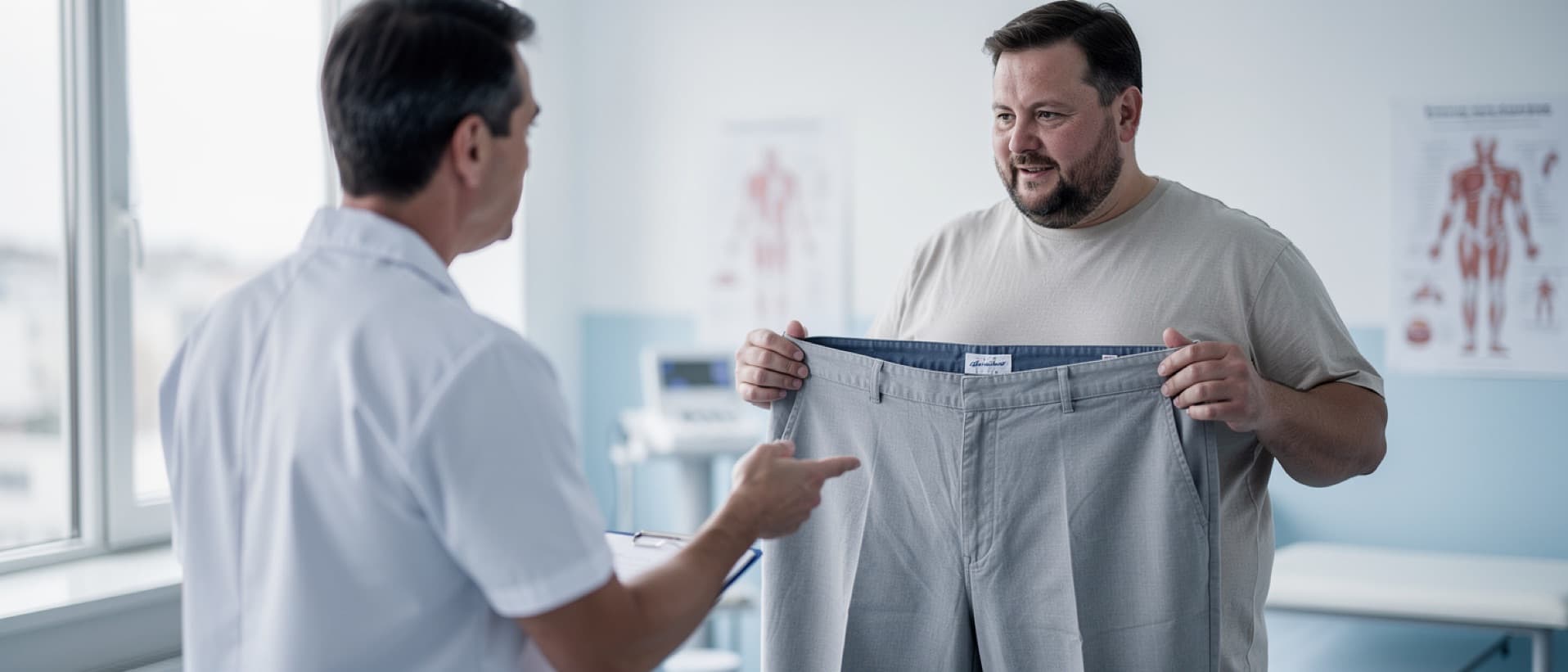
Why GLP-1 weight loss creates its own surgical demand
Rapid, drug-driven weight loss leaves a different physical result than gradual weight loss, and that difference is what's generating the surgical pipeline. A 2025 McKinsey survey of 174 aesthetics providers found that 63% of GLP-1 patients seeking facial treatments had never previously been active cosmetic-medicine patients — meaning the majority of this demand is genuinely new to the aesthetics industry, not existing patients simply adding a procedure.2 The same survey found 61% of these patients had lost between 11% and 30% of their body weight, and providers reported that this scale of rapid loss frequently exposes facial volume loss, neck and skin laxity, and body-skin laxity that patients hadn't anticipated — described in the survey as patients who "had never thought about cosmetic work until their weight loss changed the face they saw in the mirror."2 Separately, one plastic-surgery marketing analysis reports providers seeing an average of 225 GLP-1-related cosmetic patients in 2024, up from 95 the year before — more than double — though that figure is the industry's own observation rather than one attributed to a named survey or peer-reviewed source, and should be read as directional rather than precise.3
What "body contouring" actually means for this patient group
For patients who lose a large amount of weight quickly, the aesthetic concern isn't fat volume — it's the skin and tissue that no longer has fat behind it to support its shape. That's a different procedure category than the liposuction or fat-reduction work associated with more modest weight loss: it points toward tummy tucks, body lifts, arm lifts, and thigh lifts, procedures that remove and re-tighten excess skin rather than remove fat. Pricing for this category abroad follows the same steep discount pattern seen elsewhere in medical tourism. One cost breakdown puts a tummy tuck at $10,000–$18,000 in the US against $3,500–$5,500 in Turkey, $4,500–$7,500 in Mexico, and $5,000–$8,500 in Thailand; a full (circumferential) body lift — the more extensive procedure typically needed after major weight loss — runs $25,000–$50,000-plus in the US against $8,000–$15,000 in Turkey, $10,000–$18,000 in Mexico, and $12,000–$20,000 in Thailand.4 That guide doesn't address GLP-1 specifically — it's written for post-weight-loss patients generally — but the price gap it documents is exactly the gap a newly created population of post-GLP-1 patients would be shopping against if US surgery isn't covered by insurance, which body-contouring procedures typically aren't.
The trend already shows up in the official US procedure count
The demand pipeline described above isn't only a survey finding — it's visible in the American Society of Plastic Surgeons' own official 2024 procedural statistics. ASPS recorded 171,064 tummy tucks (abdominoplasty) performed in 2024, and its president, Dr. Scott Hollenbeck, attributed that year's body-contouring growth specifically to GLP-1 drugs: overall surgical procedures grew 1% from 2023, with thigh and buttock lifts up 3% and arm and neck lifts up 2% — the report's fastest-growing surgical categories — which ASPS states "may reflect the rising use of GLP-1 weight-loss medications, like Ozempic and Wegovy, which can lead to sagging skin."5 In a detail that shows how directly plastic surgeons themselves are now inside the GLP-1 pipeline rather than just downstream of it, the same report notes that ASPS member surgeons personally wrote more than 837,000 GLP-1 prescriptions in 2024, ahead of many of those same patients later pursuing body-contouring procedures.5
A destination clinic marketing directly to this population
The "Ozempic skin" framing isn't just industry-analyst language — clinics are using it directly in their own marketing. CK Health Turkey positions itself explicitly around this patient group, arguing that non-surgical or injection-only approaches are insufficient and that "surgical body contouring remains the most effective definitive solution for removing significant loose skin" after GLP-1-driven weight loss.6 Its published UK-facing price comparison quotes abdominoplasty at £3,000–£4,500 in Turkey against £6,000–£10,000 in the UK, brachioplasty (arm lift) at £2,000–£3,500 against £4,000–£7,000, thigh lift at £2,500–£4,000 against £5,000–£8,500, and a full body lift at £6,000–£9,000 against £12,000–£20,000 — a savings range the clinic itself states at 50–70%.6 That a specific clinic has already built pricing and messaging explicitly around post-GLP-1 skin laxity — rather than generic post-weight-loss marketing — is itself evidence that this demand pipeline has moved from an analyst's projection to an active competitive strategy.
The gap between "considering" and "booked"
The ASPS figures are worth reading carefully on this point: 39% "considering" surgery is a large number, but it's explicitly not the same as a booked-procedure figure, and the 20% who'd already had surgery by the time of the 2024 report presumably includes patients who chose a US surgeon rather than travel abroad.1 Nothing in the sources here quantifies how many of the "considering" group are specifically shopping internationally versus staying domestic, which means the actual size of the international-travel opportunity within this 39% is currently unmeasured rather than small — a genuine open question for destination clinics building marketing around this trend, not a settled market size.
What this means for destination clinics
Two things distinguish this demand pipeline from ordinary body-contouring marketing. First, it's defined by a shared cause (rapid GLP-1-driven weight loss) rather than a shared demographic, which means marketing built around "after significant weight loss" messaging — rather than age or general cosmetic-surgery messaging — is targeting a real, named, and growing population rather than a generic cosmetic-surgery audience. Second, the timing matters differently than for other procedures: unlike a hip replacement or dental implant, where the "when" is mostly up to the patient, body-contouring demand here is downstream of an individual patient's own GLP-1 treatment timeline — how much weight they lost, how fast, and whether they're still on the drug — which is a variable destination-clinic marketing has comparatively little visibility into compared with a chronic-condition-driven procedure.
Footnotes
-
https://vipmedispa.com/body-contouring-after-glp-1-weight-loss-what-you-need-to-know-in-2026/ ↩ ↩2
-
https://westsideaesthetics.com/blog/weight-loss-reshaping-aesthetics/ ↩ ↩2
-
https://www.lipo360.com/blog/glp-1-drugs-transforming-plastic-surgery-trends-in-2026/ ↩
-
https://curemeabroad.com/blogs/comprehensive-guide-to-skin-removal-surgery-types-cost-procedure-breakdown ↩
-
https://www.foxnews.com/health/just-one-surgical-procedure-more-popular-than-breast-augmentation-see-report ↩ ↩2
-
https://ckhealthturkey.com/treatments/weight-loss-surgery-turkey/ozempic-skin-managing-post-weight-loss-laxity/ ↩ ↩2
Evidence at a glanceMethodology
| Statement | Source | Tier | Date | Status |
|---|---|---|---|---|
| More than 800,000 aesthetic-surgery patients had used a GLP-1 drug per ASPS's 2024 report; 20% had already had plastic surgery and 39% were considering it | American Society of Plastic Surgeons survey (via industry summary)1 | 1 | 2024 | Approximate |
| 63% of GLP-1 patients seeking facial treatments in a 2025 McKinsey survey of 174 aesthetics providers had never previously been active cosmetic-medicine patients | McKinsey survey (via industry summary)2 | 2 | 2025 | Approximate |
| ASPS recorded 171,064 tummy tucks performed in 2024, with thigh/buttock lifts up 3% and arm/neck lifts up 2% -- its fastest-growing surgical categories, attributed partly to GLP-1 drugs | American Society of Plastic Surgeons official procedural statistics (via news report)5 | 1 | 2024 | Approximate |
| Providers saw an average of 225 GLP-1-related cosmetic patients in 2024, up from 95 in 2023 -- the industry's own observation, not attributed to a named survey or peer-reviewed source | Plastic-surgery marketing analysis (unattributed figure)3 | 3 | 2026 | Not substantiated |
Enjoyed this? Get more like it
Occasional emails, no spam -- just new articles as they're published.
More from Treatment Types

Comments
Loading comments…