 LymyVoyage
IVF Abroad: Greece and Spain vs. a $29,585 US Cycle
LymyVoyage finding
Disputed -- sources materially disagree.
The underlying cost gap between the US/UK and Greece/Spain is independently well-documented from multiple primary sources, but the specific "Greece draws over 20% of European fertility-travel inquiries" figure that framed this story's discovery could not be traced to any named survey or dataset and is treated here as unsubstantiated.
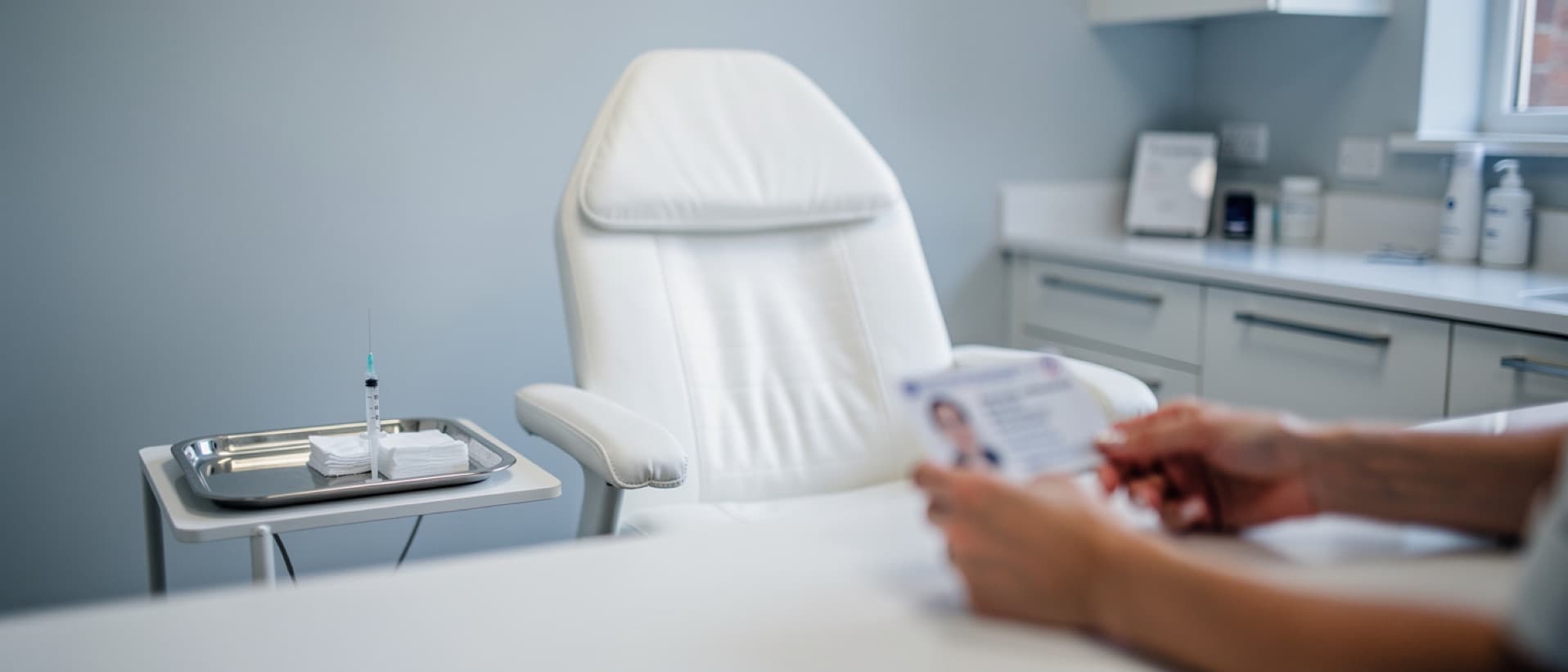
Emilie and Justin Solomon were quoted $40,000 for one round of IVF at a Florida clinic. They flew to Greece instead and paid about $12,000 for medication, fertilization, embryo storage, and the transfer — and had a son after a single cycle. Their story, first reported by KFF Health News, is now the anecdote anchoring a wave of 2026 coverage about Americans crossing the Atlantic for fertility care. One number attached to that wave — that Greece now draws "over 20% of European fertility-travel inquiries" — turns out to be the one figure in this story nobody can actually source.

What a Cycle Actually Costs, Compared
| Per-cycle cost (own eggs, before meds) | All-in cost, one cycle | Regulatory/access note | |
|---|---|---|---|
| United States | $12,000-$18,000 base cycle1 | ~$29,585 average; $54,400+ per IVF-conceived birth2 | No federal mandate; ~25 states require some insurance coverage1 |
| United Kingdom | Advertised avg £3,850; true cost avg £4,8903 | £10,000-£15,000 private, per major UK guides | Only 27% of cycles NHS-funded, down from 35% in 20193 |
| Greece | $3,000-$6,0004 | Not independently established | Age limit 54 (permit required 50+); donors can choose anonymity or disclosure5 |
| Spain | ~€4,000-€7,0006 | Not independently established | Leads Europe with 15% of all IVF cycles (165,000+/year)6 |
What a Real US Cost Study Actually Found
The clearest, most rigorously sourced number in this entire story isn't from either destination country — it's the US baseline. The Women's Reproductive Health Foundation commissioned Axene Health Partners to analyze the Merative MarketScan commercial-claims database, covering roughly five million insured Americans from 2021 through 2024, and found an average cost of $29,585 per completed IVF cycle.2 Roughly half of that is pharmacy costs alone — medication is routinely underweighted or excluded in cheaper-sounding cost estimates.2 Patients who needed three or more cycles averaged $35,542, versus $18,757 for those who succeeded on the first attempt, and the study's broader estimate — folding in genetic testing, embryo storage, pregnancy care, and delivery — puts the incremental cost of an IVF-conceived birth over a natural one at roughly $54,400.2 The study explicitly excludes cash-pay patients outside insurance claims, meaning actual costs for the uninsured are likely higher still, not lower.2 A separate US fertility-clinic cost breakdown independently arrives at a similar base-cycle range of $12,000-$18,000 before add-ons, medication, and testing — corroborating the Axene figure's shape even though it comes from a different kind of source (clinic pricing pages rather than insurance claims).1
The UK's Different Problem: Not Price, Access
The UK complicates the "everyone's fleeing to Europe for savings" framing, because its private IVF prices aren't dramatically cheaper than America's on a per-cycle basis — a private cycle with medication typically runs £10,000-£15,000, and the official average advertised package price for 2025-26 was £3,850, though the UK fertility regulator's own tracking puts the true average cost 27% higher, at £4,890, once genuinely comparable add-ons are counted.3 The UK's problem is access, not sticker price: the Human Fertilisation and Embryology Authority's own 2023 data show NHS-funded cycles fell to 27% of the national total, down from 35% in 2019, with enormous regional variation — 54% NHS-funded in Scotland versus 24% in England.3 Despite that funding squeeze, 52,400 UK patients still had more than 77,500 IVF cycles in 2023, and IVF now accounts for over 3% of all UK births — about one in 32.3
What the UK does have, and Greece/Spain coverage rarely mentions, is one of the most rigorous consumer-protection systems in fertility medicine anywhere: the HFEA's traffic-light rating of "add-on" treatments clinics often upsell alongside IVF. As of its October 2023 update, the HFEA had rated 15 common add-ons — five were rated red for safety concerns or evidence of reduced effectiveness, two black (no effect on outcomes), three yellow (conflicting evidence), three grey (insufficient evidence) — and not one was rated green, meaning not a single reviewed add-on had high-quality evidence it actually improves the odds of a baby.7 That's a real, independently documented finding about what patients get sold, in a market this piece could not find an equivalent public rating system for in either Greece or Spain.
Greece: What $12,000 Actually Buys
The Solomons' $12,000 Greek cycle, reported by KFF Health News in August 2026, is consistent with pricing at named clinics in the same reporting: Serum IVF in Athens, whose co-founder Penny Ampatzi told KFF that international patients get "a good possibility of success, plus you don't pay that high amount of money," and Pelargos IVF Medical Group, also in Athens.4 Jakub Dejewski, chair of the European Fertility Society, told KFF that patients choosing European clinics over American ones increased by more than 37% in the most recent year — the single most concrete growth figure in this entire story, though it's one source's tally rather than an industry-wide count this piece could independently corroborate.4 William Kiltz, a vice president at CNY Fertility — a US chain with 18 domestic locations that has itself expanded into competing on price — told KFF plainly: "IVF is almost a treatment that only the top 1% can afford reasonably."4
Greece's specific legal framework is a real, if underappreciated, draw independent of price: the maximum legal age for assisted reproduction is 54, with a special permit required for anyone over 50, a threshold set by two statutes (Law 3089/2002 and Law 3305/2005) enforced by Greece's National Authority for Assisted Reproduction.5 Unlike some countries that mandate strict donor anonymity, Greek law lets intended parents and donors choose among anonymous, identifiable, or disclosed-at-adulthood arrangements — a flexibility that isn't available under every European framework.5
Spain: Europe's Volume Leader, With a Caveat About Whose Numbers
Spain performs more IVF cycles than any other European country — over 165,000 a year as of the most recent cited data, 15% of the continental total, ahead of France (12.9%), Germany (11.6%), Italy (9.2%), and the UK (7.6%), according to the European Society of Human Reproduction and Embryology's most recent comparative report.6 IVF-conceived births now account for roughly 12% of all births in Spain.6 Own-egg cycles run roughly €4,000-€7,000 before medication, broadly similar to Greek pricing, with donor-egg cycles — a Spanish specialty — running higher but still a fraction of comparable US costs.
Here's a discrepancy worth flagging rather than blending: a Spanish national-registry figure from 2014 put foreign patients at roughly 8.5-10% of all fertility treatments performed in Spain, while Instituto Bernabeu — a single prominent clinic chain that markets heavily to international patients — reports that more than 55% of its own patients are foreign nationals from over 135 countries.6 Both figures can be true simultaneously: internationally focused clinics like Instituto Bernabeu draw foreign patients far out of proportion to the national average, which is dragged down by the much larger number of Spanish clinics serving mostly domestic patients. Citing the clinic-level figure as if it described Spain's fertility sector as a whole would overstate the scale of foreign demand nationally; citing only the national figure would understate what a patient actually experiences at the specific clinics doing this marketing.
The One Stat That Didn't Hold Up
The claim that put this story on this publication's radar in the first place — that Greece now draws "over 20% of European fertility-travel inquiries" — could not be traced to any named survey, dataset, or organization across an extensive search of the 2026 coverage wave, including the original KFF Health News report this whole news cycle traces back to. It doesn't appear in the KFF piece, in the European Fertility Society's public statements, or in ESHRE's cross-border-care research. It's plausible someone extrapolated it from one clinic's own inquiry logs, or it's simply gotten detached from whatever context originally qualified it. Either way, this piece is treating it as unsubstantiated rather than repeating it, because everything else in this story — the cost gap, the named cases, the growth figure from a named source — holds up to scrutiny on its own, and doesn't need an unverifiable statistic to make the case.
What This Data Cannot Tell You
None of the figures above can be combined into a single, fair "cost per baby" comparison across all four places, because success rates aren't reported on a common basis. The UK's HFEA publishes standardized, audited national success rates by age and treatment type.3 Greek and Spanish clinic-quoted success rates in this reporting are the clinics' own figures, not independently audited national statistics comparable to HFEA's — a real difference in evidentiary weight that a simple price table can't capture. This data also can't tell you what happens if a cycle abroad fails and needs a second attempt, how continuity of care works if complications arise after flying home, or how medication transport and embryo/record transfer actually go in practice — none of which appeared as a quantified risk in any source found for this piece, only as a general caution.
How to Use This If You're Actually Considering It
- Compare the all-in cost, not the headline cycle price. The $29,585 US average and the Greek/Spanish per-cycle quotes aren't measuring identical baskets of services — ask each clinic explicitly what's included (medication, storage, transfer, genetic testing) before comparing numbers.24
- Ask for the clinic's actual national-registry-reported success rate, not just its own marketing figure, if the destination country publishes one — Spain and Greece's oversight bodies exist, but this research could not confirm either publishes audited per-clinic rates as consistently comparable as the UK's HFEA does.3
- If cost, not access, is your main driver, the UK's savings over the US are smaller than they look — its real problem is NHS funding scarcity, not private-sector pricing, so a UK patient weighing Greece or Spain is often comparing access, not just money.3
- Verify legal specifics for your actual situation — age limits, donor-anonymity rules, and single-parent or same-sex-couple access vary by country and can matter more than price for some patients; Greece's rules, for instance, are more flexible on donor identity than commonly assumed.5
- Treat any specific "X% of inquiries" or "fastest-growing" statistic with the same skepticism applied here — the 37%-growth figure from a named fertility-society chair held up as a real, attributed claim; the 20%-of-inquiries figure did not.4
An American couple quoted $40,000 for one IVF cycle in Florida flew to Greece instead and paid about $12,000 for the same round — successfully. Stories like this are driving real 2026 headlines about a shift to European fertility care. Is the shift as big as the headlines suggest?
Footnotes
-
https://www.advancedfertility.com/blog/what-is-the-average-cost-of-ivf-in-the-united-states — Advanced Fertility Center of Chicago, "What Is the Average Cost of IVF in the United States?" (published Mar 24, 2026). Accessed Sep 10, 2026. ↩ ↩2 ↩3
-
https://axenehp.com/cost-of-assisted-reproductive-technology-treatments/ — Axene Health Partners, commissioned by the Women's Reproductive Health Foundation, "The Cost of Assisted Reproductive Technology Treatments," based on Merative MarketScan commercial claims data, ~5 million members, 2021-2024 (published Jul 14, 2026). Accessed Sep 10, 2026. ↩ ↩2 ↩3 ↩4 ↩5 ↩6
-
https://www.hfea.gov.uk/about-us/publications/research-and-data/fertility-treatment-2023-trends-and-figures/ — Human Fertilisation and Embryology Authority, "Fertility treatment 2023: trends and figures" (published Jun 26, 2025). Accessed Sep 10, 2026. ↩ ↩2 ↩3 ↩4 ↩5 ↩6 ↩7 ↩8
-
https://kffhealthnews.org/health-care-costs/ivf-tourism-fertility-in-vitro-fertilization-high-costs-pregnancy-parenthood-greece/ — KFF Health News, LJ Dawson, "High Fertility Costs Push Americans Abroad for IVF Treatment" (published Aug 28, 2026). Accessed Sep 10, 2026. ↩ ↩2 ↩3 ↩4 ↩5 ↩6
-
https://www.eggdonationfriends.com/ivf-egg-donation-country-greece/ — EggDonationFriends, "Egg Donation in Greece," summarizing Greek Law 3089/2002 and Law 3305/2005 as enforced by the National Authority for Assisted Reproduction. Accessed Sep 10, 2026. ↩ ↩2 ↩3 ↩4
-
https://www.institutobernabeu.com/en/news/spain-leads-in-vitro-fertilization-treatments-performed-in-europe/ — Instituto Bernabeu, "Spain leads in vitro fertilization treatments performed in Europe," citing European Society of Human Reproduction and Embryology (ESHRE) comparative data (published Aug 2, 2024). Accessed Sep 10, 2026. ↩ ↩2 ↩3 ↩4 ↩5
-
https://www.hfea.gov.uk/about-us/news-and-press-releases/2023/uk-fertility-regulator-launches-improved-ratings-for-fertility-treatment-add-ons/ — Human Fertilisation and Embryology Authority, "UK fertility regulator launches improved ratings for fertility treatment 'add-ons'" (published Oct 19, 2023). Accessed Sep 10, 2026. ↩
Evidence at a glanceMethodology
| Statement | Source | Tier | Date | Status |
|---|---|---|---|---|
| A 2026 study of ~5 million insured Americans found average IVF-cycle cost of $29,585, and full IVF-conceived-birth cost (with testing, storage, pregnancy care, delivery) of ~$54,400 | Health-economics study commissioned by a nonprofit foundation, using insurance claims data2 (Archived copy) | 1 | 2026-07-14 | Supported |
| Greek clinics named in 2026 reporting (Serum IVF, Pelargos IVF) charge roughly $3,000-$6,000 per IVF cycle before medication; one American couple paid ~$12,000 all-in in Greece versus a $40,000 quote in Florida | Nonprofit health journalism (KFF Health News)1 (Archived copy) | 4 | 2026-08-28 | Approximate |
| The claim that Greece draws 'over 20% of European fertility-travel inquiries' could not be traced to any named survey, dataset, or organization, including the original KFF Health News report the 2026 coverage wave traces to | Absence-of-evidence finding from this publication's own verification attempt1 | 4 | -- | Not substantiated |
| UK NHS-funded IVF cycles fell to 27% of the national total in 2023, down from 35% in 2019, with regional variation from 54% (Scotland) to 24% (England); 52,400 patients had 77,500+ cycles in 2023, and IVF now accounts for over 3% (~1 in 32) of UK births | UK fertility regulator, official statistics3 (Archived copy) | 1 | 2025-06-26 | Supported |
| The HFEA's traffic-light rating of 15 common IVF add-ons (as of Oct 2023) rated none as 'green' (proven effective); 5 red, 2 black, 3 yellow, 3 grey | UK fertility regulator, official release7 (Archived copy) | 1 | 2023-10-19 | Supported |
| Spain performs 15% of all European IVF cycles (165,000+/year), more than any other European country; nationally ~8.5-10% of Spain's fertility patients are foreign, but a single internationally-focused clinic chain (Instituto Bernabeu) reports 55%+ of its own patients are foreign nationals | Fertility clinic, citing ESHRE comparative data5 (Archived copy) | 3 | 2024-08-02 | Approximate |
| Greece's legal age limit for assisted reproduction is 54 (permit required from 50), governed by Law 3089/2002 and Law 3305/2005; donors can choose among anonymous, identifiable, or disclosed-at-adulthood arrangements rather than facing mandatory anonymity | Fertility-tourism information site summarizing Greek statute6 | 3 | -- | Approximate |
Enjoyed this? Get more like it
Occasional emails, no spam -- just new articles as they're published.
More from Treatment Types


Comments
Loading comments…