 LymyVoyage
Does Medical Tourism Price Out Local Patients?
LymyVoyage finding
Disputed -- sources materially disagree.
Four independent country case studies document the same mechanism (health-worker migration and price increases in facilities serving foreign patients), but the underlying evidence base is thin by its own researchers' admission, and a separate 49-country econometric study finds medical tourism revenue can also expand local healthcare capacity when governments direct it that way.
The pitch for medical tourism is almost always framed around the traveling patient: a knee replacement in Costa Rica for a quarter of the US price, a hair transplant in Turkey bundled with a hotel stay, a cardiac bypass in India that costs less than a single night in an American ICU. The implicit promise is that going abroad makes healthcare more affordable — full stop.
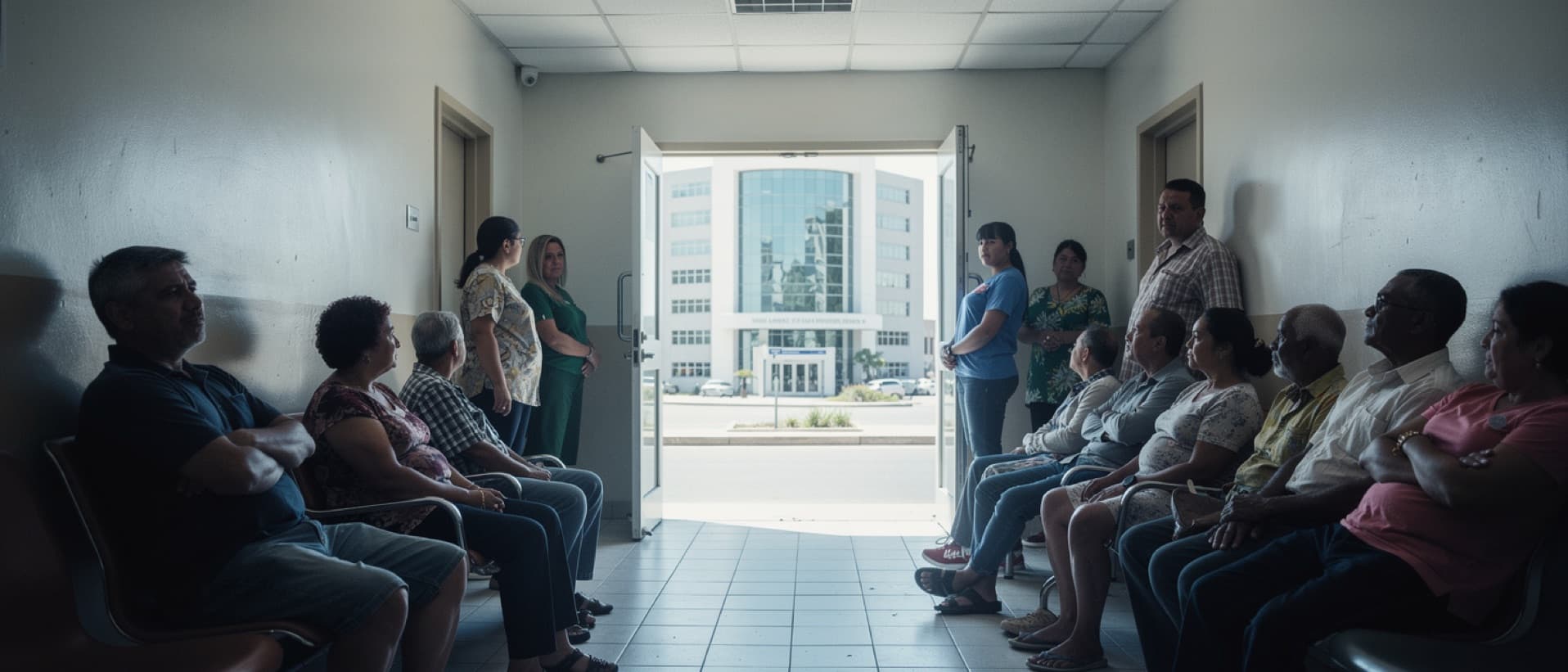
But affordability research on medical tourism's destination countries tells a more complicated story, one that rarely makes it into the glossy cost-comparison tables. In Thailand, Barbados, Guatemala, and India, health economists and health-equity researchers have spent nearly two decades documenting a specific, recurring pattern: when a country builds a private healthcare sector around wealthy foreign patients, doctors and nurses migrate out of public hospitals toward it, and prices in the private sector — sometimes across the wider system — start to climb. The people left behind are not the medical tourists. They're the local patients who were never going anywhere.
This isn't a fringe theory. It's the subject of a 2010 scoping review, a Barbadian government-commissioned qualitative study, a Guatemalan health-workforce study, and — as of August 2026 — an Indian parliamentary committee report recommending that hospitals profiting from foreign patients be required to subsidize care for the poor. At the same time, the evidence for exactly how big this effect is, and whether it outweighs medical tourism's genuine economic benefits, is thinner and more contested than either side of the debate likes to admit.
What the research actually documents, country by country
| Destination | Documented concern | Type of evidence | Primary source |
|---|---|---|---|
| Thailand | Health-worker migration from public to private hospitals; private-hospital prices for common procedures rose "substantially" | Quantitative (survey of 4,755 patients; hospital pricing data) | NaRanong & NaRanong, Bulletin of the World Health Organization, 20111 |
| Barbados | Focus-group participants described a proposed medical tourism facility as risking "elitist healthcare" that undermines equity | Qualitative (stakeholder focus groups) | International Journal for Equity in Health, 20152 |
| Guatemala | Physicians and nurses anticipate migration to higher-paying tourism clinics, and English-language training for foreign patients diverting resources from Indigenous-language care needs | Qualitative (health-worker interviews) | Crooks et al., Human Resources for Health, 20193 |
| India | Private hospitals received tax breaks, subsidized land, and reduced import duties while treating foreign patients; a 2026 parliamentary panel found benefits haven't reached poorer Indian patients | Mixed (policy analysis; 2026 government report) | Sen Gupta, Indian Journal of Medical Ethics, 20084; Parliamentary Standing Committee on Health & Family Welfare, 176th Report, 20265 |
None of these four cases is identical, and none of the researchers behind them claim medical tourism is uniformly harmful. What they share is a specific causal story, and it's worth walking through country by country because the mechanism looks slightly different each time.
Thailand: the clearest price data, and its caveats
Thailand is the most heavily studied case because it was one of the first countries to actively court medical tourists at scale, and because Thai economists Anchana and Viroj NaRanong got real hospital-level data to study it. Their 2011 study in the Bulletin of the World Health Organization combined commerce-ministry financial data with a survey of 4,755 foreign and Thai outpatients across two private hospitals, and tracked pricing trends for five common procedures — caesarean section, appendectomy, hernia repair, cholecystectomy, and knee replacement — across five private hospitals.1
Their finding, as summarized in a subsequent CMAJ report on the study: medical tourism "has raised costs in private hospitals substantially and is likely to raise them in public hospitals and in the universal health-care insurance covering most Thais as well."6 The same CMAJ piece notes that more than 80% of Thailand's population relies on the country's basic government health scheme, and that staffing levels in those state hospitals were being undermined by a brain drain toward private, foreign-patient-facing facilities — hitting dentistry and nursing especially hard, since medical tourists frequently fly in specifically for dental work.6 NaRanong & NaRanong separately estimated medical tourism's economic contribution at roughly 0.4% of Thailand's GDP — a real but modest slice of the economy, next to a labor-market effect the authors describe as outsized relative to that contribution.1
That said, this is a single primary data source, gathered from two hospitals in one country — it establishes that price increases and staffing pressure happened in the specific facilities studied, not a universal law of medical tourism economics. Thailand's own government has continued to promote the medical tourism sector since this research was published, which suggests Thai policymakers weighed the tradeoff differently than the equity researchers did.
Barbados: a debate the researchers admit they couldn't resolve
Barbados offers a useful contrast because, unlike Thailand, it didn't yet have a large medical tourism sector when researchers studied it — they were capturing the debate in advance, through focus groups with nurses and healthcare users as the island considered expanding the industry. The 2015 study, published in the International Journal for Equity in Health, found broad agreement on two concerns: that medical tourism could pull health workers from public to private facilities, and that it could burden the country's single tertiary hospital.2
But on a third question — whether a higher-quality tier of care for medical tourists would constitute unacceptable "elitist healthcare," as one participant put it, versus simply the "best care on home ground" that could eventually benefit everyone — the researchers found no consensus. This was, in their words, the most fiercely contested issue in the focus groups.2 It's a useful corrective to any version of this story that treats "medical tourism harms local patients" as a settled question: even the people asked to weigh the tradeoff directly, in the country actually facing the decision, disagreed with each other.
Guatemala: optimism and inequity in the same conversation
A 2019 qualitative study in Human Resources for Health interviewed Guatemalan physicians and nurses about how they expected medical tourism to affect their profession. Many were genuinely optimistic: one participant said medical tourism "will…obligate physicians to elevate their level so that they can compete with the rest of the world," and another welcomed the idea that international accreditation requirements would raise standards across facilities.3
Guatemalan health workers interviewed for the study anticipated that resources would go toward English-language training for international patients — even as the country's Indigenous populations continue to face language barriers to basic care in Spanish-language facilities.3
The same interviews surfaced a sharper concern: that better-paid private, foreign-patient-facing clinics would draw physicians away from public-sector roles, and that medical tourism development would concentrate resources in high-paying specialties rather than the primary care Guatemala's poorer and rural populations actually need. The authors conclude that the benefits workers anticipated would accrue mainly to an elite tier of health workers and facilities, doing little for the country's Indigenous and rural communities.3
India: government money already flowing to medical tourism's private beneficiaries
India's version of this story is less about hypothetical future effects and more about policy choices already made. Writing in the Indian Journal of Medical Ethics in 2008, physician and public-health researcher Amit Sen Gupta documented specific subsidies flowing to private hospitals serving medical tourists: reduced import duties and increased depreciation allowances (from 25% to 40%) on medical equipment, prime land at subsidized rates, and what he called an "internal brain drain" — publicly trained doctors, educated for a nominal Rs 500-a-month fee, moving into private hospitals that then serve paying foreign patients. Sen Gupta estimated the value of this internal subsidy at roughly Rs 500 crore a year.4
Nearly two decades later, an Indian parliamentary body reached a similar conclusion through an official channel. The Parliamentary Standing Committee on Health & Family Welfare's 176th Report, "Affordability and Accessibility of Healthcare Facilities in Public and Private Sector," was tabled in the Rajya Sabha and laid before the Lok Sabha on August 7, 2026.5 Among its 368 recommendations, the committee found that medical tourism has significantly boosted revenues at large private hospital chains — many of which expanded with the help of government incentives, including liberal foreign direct investment policies — but that the benefits haven't adequately reached "economically weaker" Indian patients.5 The committee recommended a "structured cross-subsidisation mechanism," under which hospitals earning substantial revenue from international and high-net-worth patients would be required to provide subsidized tertiary care to poorer Indian patients, alongside a requirement that large corporate hospitals reserve a defined share of beds at regulated rates under India's national health insurance scheme.5 The report's data draws on India's National Health Accounts, National Sample Survey Office, and National Family Health Survey — meaning this isn't a single researcher's estimate but a government body's own synthesis of national data.
Why this gap is real, according to the researchers studying it
A 2010 scoping review in the International Journal for Equity in Health — the most systematic attempt to synthesize this literature — lays out the mechanism plainly: medical tourism facilities pay better and use more advanced technology, which draws health workers away from the public sector; because these facilities cluster in cities, this also accelerates the migration of providers out of rural areas; and if patient flows reach the volumes early industry forecasts predicted, "this could ultimately lead to locals being priced out of their own health care system, as demand from foreign patients can drive up the costs of providing care."7 A related 2013 legal-and-policy analysis in the Journal of Law, Medicine & Ethics by Y.Y. Brandon Chen and Colleen M. Flood makes the case for why this matters for regulation specifically: because medical tourism concentrates capital, staff, and government subsidies in private facilities serving a wealthy, health-secure clientele, it can widen — not narrow — the gap between a country's insured and uninsured populations, absent deliberate policy intervention.8
That's the case for taking the concern seriously. It's independently corroborated by four separate qualitative and quantitative studies across four different countries with different healthcare systems, political structures, and levels of medical tourism development — Thailand, Barbados, Guatemala, and India all point to the same underlying mechanism (private-sector migration of health workers, concentrated in facilities serving foreign patients) even though none of them cite each other's data.1234
What the headline numbers leave out
Two things complicate a simple "medical tourism hurts local patients" conclusion.
First, the same 2010 scoping review that documents the equity concern also delivers an important caveat about its own evidence base: of 203 sources the researchers reviewed on medical tourism's effects, only 6 reported primary data.7 Most of what's "known" about medical tourism's downstream effects on local health systems is analysis, commentary, and extrapolation built on a small number of actual empirical studies — which is exactly why the four country-specific pieces above (Thailand's hospital-level pricing data, Barbados's and Guatemala's structured interviews, India's national-data-backed government report) carry more weight than a general industry claim, but also why the overall picture remains thinner than the volume of writing on the topic would suggest.
Second, at least one recent quantitative study complicates the story in the other direction. A 2024 analysis in the European Journal of Health Economics, examining 49 developed and emerging economies from 2008 to 2022, found that higher medical tourism revenue per capita is associated with stronger healthcare-sector growth overall — and pointed to Cuba as a case where the government has directly used medical tourism revenue to help fund its public healthcare system.9 The same authors caution that this benefit doesn't happen automatically: without deliberate policy choices to direct medical tourism revenue toward public health investment, "the benefits of medical tourism should not be confined to the private sector" is a warning, not a guarantee.9 In other words, the outcome documented in Thailand and India — private capture of medical tourism's gains — is a policy failure specific to those systems, not an economic law that applies everywhere medical tourists go.
There's a third, more basic caveat worth naming: even the topline numbers on how many people practice medical tourism at all have a history of being overstated. Deloitte's widely cited 2008 estimate that 750,000 Americans traveled abroad for care in 2007 came with a projection that the number would reach 6 million by 2010 — a forecast that never materialized. A subsequent Deloitte report revised the actual 2009 figure down to 648,000 and projected a more modest 1.6 million by 2012.10 If the industry's own headline growth numbers have historically run several multiples ahead of reality, it's worth treating any single, precise-sounding "here's how many local patients are affected" figure with the same skepticism.
How to actually use this
If you're a patient evaluating medical tourism purely on personal cost, the local-equity question above doesn't change your own math — the price you'll pay in Bangkok, Bridgetown, or Bangalore is what it is. But if you're evaluating medical tourism as a policy question — for a government considering how to court the industry, or as someone trying to understand why a "win-win, cheaper-for-everyone" pitch draws such fierce pushback from health-equity researchers and, increasingly, from the destination countries' own legislators — the documented pattern matters: the risk to local access is real and mechanistically well-understood, it's been directly observed in at least one country with hospital-level data (Thailand), and it's now driving actual policy proposals (India's 2026 parliamentary report). Whether it's inevitable, though, depends on choices those governments make about where the revenue goes — not on medical tourism itself.
"Get a cardiac bypass for less than one night in a US ICU." Medical tourism ads promise cheaper care for travelers, and more revenue for the countries that host them. Sounds like a win-win. But what happens to the local patients who never left home?
Footnotes
-
https://www.scielosp.org/article/bwho/2011.v89n5/336-344/ — Anchana NaRanong and Viroj NaRanong, "The effects of medical tourism: Thailand's experience," Bulletin of the World Health Organization, Vol. 89, No. 5 (published May 2011). Accessed Sep 8, 2026. ↩ ↩2 ↩3 ↩4
-
https://pmc.ncbi.nlm.nih.gov/articles/PMC4320816/ — International Journal for Equity in Health, "'Best care on home ground' versus 'elitist healthcare': concerns and competing expectations for medical tourism development in Barbados," Vol. 14 (published 2015). Accessed Sep 8, 2026. ↩ ↩2 ↩3 ↩4
-
https://pmc.ncbi.nlm.nih.gov/articles/PMC6624946/ — Valorie A. Crooks, Ronald Labonté, Alejandro Ceron, Rory Johnston, Jeremy Snyder, Marcie Snyder, "'Medical tourism will…obligate physicians to elevate their level so that they can compete': a qualitative exploration of the anticipated impacts of inbound medical tourism on health human resources in Guatemala," Human Resources for Health (published Jul 12, 2019). Accessed Sep 8, 2026. ↩ ↩2 ↩3 ↩4 ↩5
-
https://ijme.in/articles/medical-tourism-in-india-winners-and-losers/ — Amit Sen Gupta, "Medical tourism in India: winners and losers," Indian Journal of Medical Ethics (published Jan 2008). Accessed Sep 8, 2026. ↩ ↩2 ↩3
-
https://theprint.in/health/private-hospitals-profiting-from-medical-tourism-should-subsidise-poor-indians-parliamentary-panel-says/3008828/ — ThePrint, reporting on the Parliamentary Standing Committee on Health & Family Welfare's 176th Report, "Affordability and Accessibility of Healthcare Facilities in Public and Private Sector," tabled in Parliament Aug 7, 2026. Accessed Sep 8, 2026. ↩ ↩2 ↩3 ↩4
-
https://pmc.ncbi.nlm.nih.gov/articles/PMC3883836/ — Lauren Vogel, "Medical tourism driving health care disparity in Thailand," CMAJ, Vol. 186, Issue 1 (published Jan 2014), citing NaRanong & NaRanong's WHO Bulletin data. Accessed Sep 8, 2026. ↩ ↩2
-
https://pmc.ncbi.nlm.nih.gov/articles/PMC2987953/ — Rory Johnston, Valorie A. Crooks, Jeremy Snyder, Paul Kingsbury, "What is known about the effects of medical tourism in destination and departure countries? A scoping review," International Journal for Equity in Health, 9:24 (published Nov 3, 2010). Accessed Sep 8, 2026. ↩ ↩2
-
https://www.cambridge.org/core/journals/journal-of-law-medicine-and-ethics/article/abs/medical-tourisms-impact-on-health-care-equity-and-access-in-low-and-middleincome-countries-making-the-case-for-regulation/145AAB2E35AF9C6B2406CF96A3506E0C — Y.Y. Brandon Chen and Colleen M. Flood, "Medical Tourism's Impact on Health Care Equity and Access in Low- and Middle-Income Countries: Making the Case for Regulation," Journal of Law, Medicine & Ethics, Vol. 41, No. 1 (published Spring 2013). Accessed Sep 8, 2026. ↩
-
https://pmc.ncbi.nlm.nih.gov/articles/PMC11889019/ — Hassan F. Gholipour and Kourosh Esfandiar, "Does medical tourism promote growth in the healthcare sector?" European Journal of Health Economics (published Jun 6, 2024). Accessed Sep 8, 2026. ↩ ↩2
-
https://blog.cabi.org/2010/12/06/medical-tourism-what-do-we-know/ — CABI Blog, "Medical tourism: what do we know?" (published Dec 6, 2010), citing Deloitte Center for Health Solutions reports on outbound US medical tourism estimates. Accessed Sep 8, 2026. ↩
Evidence at a glanceMethodology
| Statement | Source | Tier | Date | Status |
|---|---|---|---|---|
| In Thailand, medical tourism raised prices in private hospitals substantially and is likely to raise them in public hospitals and the national universal health-care scheme as well | Peer-reviewed academic study (WHO Bulletin)1 | 1 | 2011 | Approximate |
| More than 80% of Thailand's population relies on the country's basic government health scheme, and staffing at those state hospitals has been undermined by health-worker migration toward private facilities serving foreign patients | News reporting in a peer-reviewed medical journal (CMAJ), citing WHO Bulletin data6 | 2 | 2014 | Supported |
| Barbadian focus-group participants raised three core equity concerns about medical tourism development: health-worker migration to private facilities, burden on the country's lone tertiary hospital, and the risk of a two-tier 'elitist healthcare' system -- with no clear consensus reached on the third | Peer-reviewed academic qualitative study2 | 1 | 2015 | Approximate |
| Guatemalan health workers anticipated that medical tourism would draw physicians toward higher-paying private clinics and prioritize English-language training for international patients, potentially at the expense of resources for the country's Indigenous and rural populations | Peer-reviewed academic qualitative study3 | 1 | 2019 | Approximate |
| India's private hospitals serving medical tourists received reduced import duties, increased depreciation allowances, and subsidized land, alongside an estimated Rs 500 crore/year 'internal brain drain' subsidy from publicly trained doctors moving to the private sector | Peer-reviewed academic policy analysis4 | 1 | 2008 | Approximate |
| India's Parliamentary Standing Committee on Health & Family Welfare's 176th Report (tabled Aug 7, 2026) found medical tourism has boosted private hospital revenue without adequately benefiting economically weaker Indian patients, and recommended mandatory cross-subsidization | News reporting on an official government committee report5 | 1 | 2026 | Supported |
| A 2010 scoping review found that of 203 sources reviewed on medical tourism's effects on destination/departure countries, only 6 reported primary empirical data | Peer-reviewed academic scoping review7 | 1 | 2010 | Approximate |
| A 49-country study (2008-2022) found higher medical tourism revenue per capita is associated with stronger healthcare-sector growth, citing Cuba as an example of revenue funding public healthcare -- but cautioned this benefit requires deliberate policy direction, not automatic | Peer-reviewed academic econometric study9 | 1 | 2024 | Approximate |
| Deloitte's widely cited projection that outbound US medical tourism would reach 6 million patients by 2010 did not materialize; a later Deloitte report put the actual 2009 figure at 648,000 and projected 1.6 million by 2012 | Industry commentary citing a market-research firm's reports10 | 4 | 2010 | Approximate |
Enjoyed this? Get more like it
Occasional emails, no spam -- just new articles as they're published.
More from Costs & Savings

Comments
Loading comments…